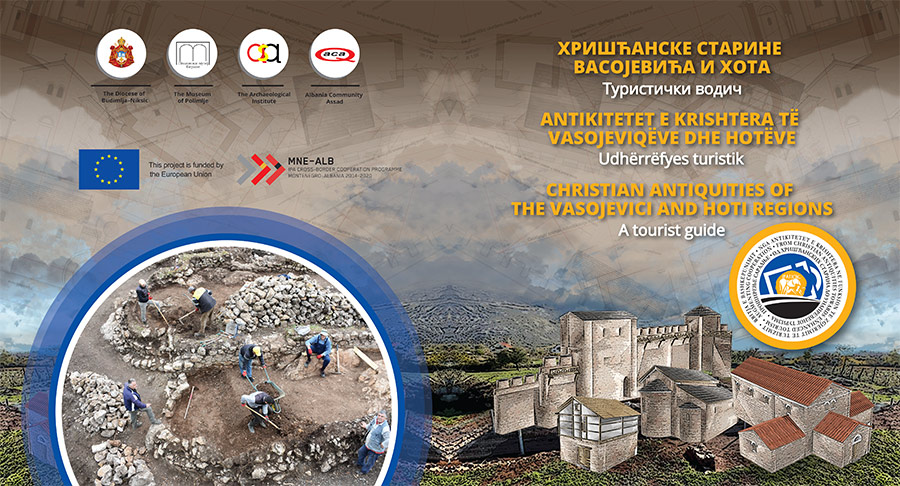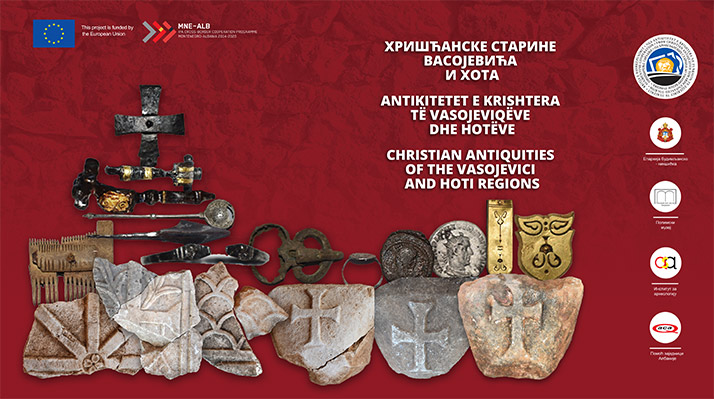
The project “Augmenting Cooperation – from Christian Antiquities towards Enhanced Tourism” was launched by the famous Albanian archaeologist, Professor Gezim Hoxha of the Archaeological Institute of Albania. Based on the literature, the professor was aware that there are remains of a Christian church at the site in Hoti, because this site was described in 1912 by the Austro-Hungarian archaeologist Baron Franz Nopcsa von Felső-Szilvás. Also, the Franciscan Order, active in Hoti, knew about these remains, as well as the local population, which, despite pressure from the communist authorities to turn the forest-covered terrain into the agricultural land of collective farms, managed to bypass the cultivation of the small area of forest where the church, according to tradition, was located.
Hoti, in the very north of Albania, right next to the border with Montenegro, was not a priority for funding systematic archaeological research by the Albanian government, so Professor Hoxha, aware of the existence of EU crossborder programmes, decided to seek partners among cultural institutions in Montenegro, along with the NGO ACA, which had previously had projects in this area, whose activists were also aware of the potential of this site for local development, and which had experience in implementing international projects and experience in supporting the local community. So they got in touch with their colleagues from the Museum of Polimlje in Berane, who were also planning to start systematic research of a mysterious site near Berane, where sondage research had been conducted in the 1980s, pointing to the existence of fortifications and Christian churches.
The Museum of Polimlje found itself in a similar dilemma to that of Professor Hoxha, as it had never implemented an EU-funded project before. However, decades of fruitful cooperation with the Serbian Orthodox Church, in particular the Diocese of Budimlja–Niksic, which owns most of the protected cultural assets in its canonical jurisdiction, and which since 2012 has been participating in EU cross-border cooperation projects related to the protection and promotion of cultural heritage and has been supporting vulnerable groups, motivated the Museum of Polimlje, more precisely archaeologist Predrag Lutovac, to turn to the Diocese of Budimlje-Niksic regarding a partnership. Given the previous experience in the development and implementation of EU projects and the early Christian content of the project, and with the blessing of Bishop Ioannicius, now Metropolitan of Montenegro and the Littoral, in 2016 these four institutions applied for funding and in 2018 began implementing this project.
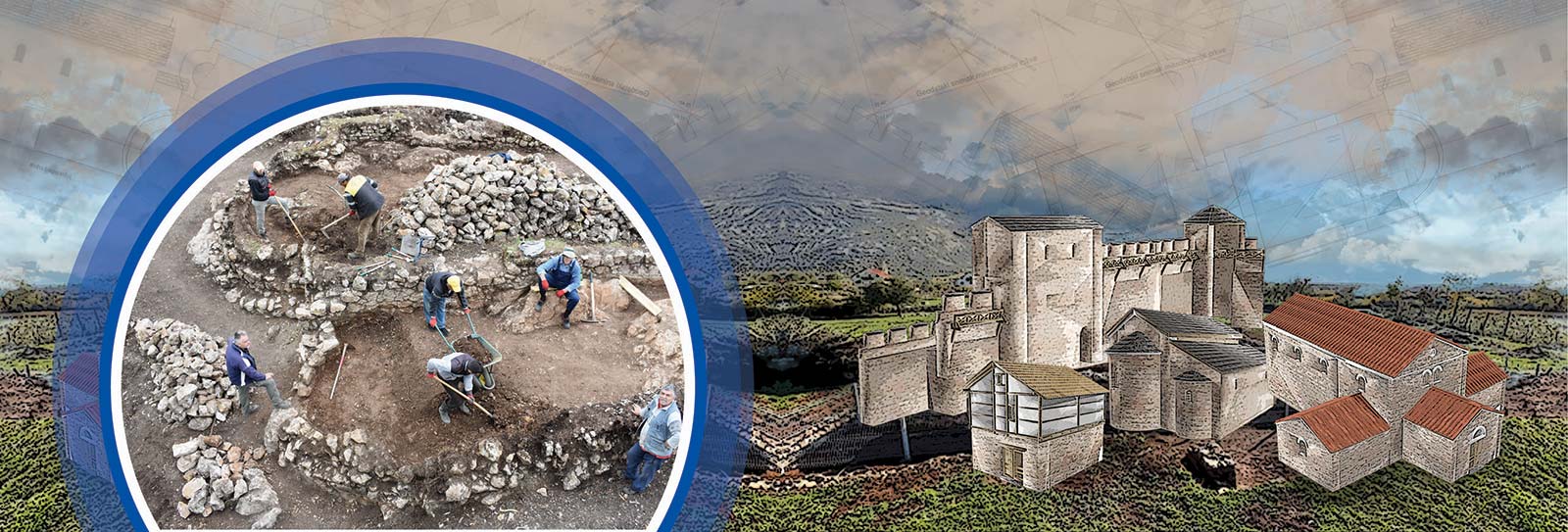
Despite the force majeure of the devastating earthquake in Albania and the twoyear coronavirus epidemic, a project team of 11 members from four organisations of different profiles, cultures, languages and worldviews has achieved crossborder cooperation and uncovered two monuments, in the excavation of which local young people and students have taken part, and which has been promoted in the most modern ways, in the virtual and academic world.